

Feb
06 -
07 -
15 -
15 -
21 -
|
About the Author
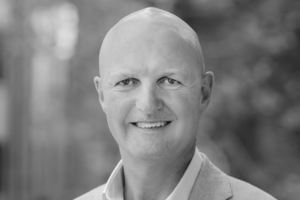
Mark Story
Mark Story is one of Australasia's most prodigious financial and business journalist. With 16 years experience in print and online publishing, he has worked on well over 50 publications throughout Australasia. A lengthy stint in the US as chief reporter on a business weekly saw him land a scoop on Osama Bin Laden immediately after the 9-11 terrorist attacks. His career as a journalist encompasses staff journalist, correspondent, and columnist through to chief reporter. A former editor of MIS and Investor Monthly, and group editor of Australia's Mining Monthly and Petroleum magazines - Story works on numerous dailies, online equity publications and national magazines in the economic, personal investment, management, property and institutional investment space.
Articles Published
Showing results 1 to 5 of 5
When insurance cover unearths unexpected 'value-add'
What comes first, the insurance cover or the underlying business succession strategy? As Melbourne-based company directors discovered by default – no business should have one without the other.
With ... Read moreWhat comes first, the insurance cover or the underlying business succession strategy? As Melbourne-based company directors discovered by default – no business should have one without the other.
With growing concerns that they had inadequate personal life and income insurance, forty-something owner/directors Martin Morey and David Greig of Melbourne-based commercial air conditioning specialists, Fraser & Mountain began a search for adequate protection. Based on a referral from the firm’s general insurance broker, Morey approached Todd Rowson, business risk adviser with Trumpet Financial, to provide some specific death, total permanent disability and key-man insurance cover options.
However, Morey and Greig got significantly more than they bargained for when Rowson’s initial review of requirements unearthed a Pandora’s box of exposures confronting the business. Had these issues not been addressed, Rowson said the company would have been left exposed to significantly greater risks than the directors simply being under-insured.
“Given that Martin and David only had death and total permanent disability (TPD) insurance via previous SGC to personal super, they were both significantly under protected,” said Rowson.
Building the framework
Insurance cover aside, Rowson said the company lacked a legal framework governing myriad business procedures, none the least being what happens when a director leaves the company.
“Results of a recent Monash University study show that less than seven percent of businesses have an agreement governing the unexpected involuntary departure of business partners and directors – whether it’s through illness, death, retirement or otherwise,” advises Rowson.
Morey never envisaged that the services of a financial planning firm like Trumpet could extend beyond insurance or personal wealthy creation and into the realm of business succession strategy. Nor did he realise that by incorporating insurance cover within the agreement – the business succession strategy would be provided at no additional cost beyond that paid in commission.
“It was a wake-up call to realise that the expertise of a financial planning firm could extend to such matters, and it opened up our eyes to the importance of a buy/sell agreement,” said Morey. “We’d never formally discussed how business revenue might be impacted if one of the directors left or died - let alone what it meant for any future ownership structure.”
Given that one of the firm’s three directors was in his mid 60s, Morey said the business succession agreement - constructed under Rowson’s guidance - also needed to address what would happen to his share of the business after his impending retirement.
“During my initial meeting with Martin, who had approached me individually, I become mindful that the security and continuity of the business was an issue,” said Rowson.
“While Martin and David wanted to buy out their senior partner, there was nothing in place to prescribe when or how this would be executed. Equally important, there was no business succession structure governing how they’d operate after his retirement.”
Overarching agreement
After going through a number of ‘what-if’ scenarios with Morey and Greig, Rowson established working guidelines on what would happen within the business if and when any of them were to eventuate. After running the same ‘what if’ scenarios over their family considerations, Rowson made a series of recommendations that would be incorporated into a formal overarching agreement.
“Given his age, the associate costs, and his plans to exit the business, Morey and Greig were understandably reluctant to insure their more-senior partner. But they did have to address how the sale of his long-standing stake in the business would be executed,” recalls Rowson.
Key considerations that Rowson needed Morey and Greig to address before an overarching agreement could be reached included:
A. What would a buy/sell agreement look like? “The buy/sell agreement was a straight forward net-equity payout,” said Rowson.
B. What impact would a director’s inability to return to work have on revenue?
C. What would happen to the business in the event of director’s death?
“It was established that if one of us died, our family would be paid an amount - based on pre-determined valuations - and the remaining equity in the business would automatically transfer to the surviving partner,” said Morey.
D. What impact would a director’s need for income following injury have on the company’s resources?
E. What responsibilities would directors have should one of them choose to exit the business?
F. What methodology would be used to determine the amount and speed at which payments would be made to a director who wasn’t insured?
The implementation
Firstly, based on Rowson’s advice, both Morey and Greig took out death or TPD insurance cover with ABC Insurance - in the event of illness or injury up to age 65 - plus ‘key-man’ revenue protection.
“Key-man cover meant that in the event that one of us was incapacitated, the funding needed to hire expertise to help run the company (for up to two years) wouldn’t financially burden the business,” said Morey.
Secondly, sufficiently formalising Morey and Greig’s thinking on certain business outcomes meant that they would spend significantly less time on fees once Rowson handed them over to specialists required to prepare the legal agreement.
He said going through this preparatory process in some detail acted as a catalyst to progress things in other areas, especially regarding the exit of the retiring director.
“Putting things on the table allowed the three directors to have necessary discussions around time-frames and roles of those involved,” said Rowson.
Buy/sell
Emanating from these discussions was the all-important buy/sell agreement outlining how and within what time frame the two remaining directors would purchase the older partner’s share of the business. Given that the older partner also owned the premises from which the company operated, a corresponding lease agreement was also drafted simultaneously.
Other obligations within this agreement included the buy options in respect to equity, tax implications of funds received under various insurances, and their stated values. Rowson said it was equally important that the agreement include a prescribed mechanism for dispute resolution, a schedule identifying the underlying value of the business, and the values held by each director and under what entities (shares, units, family trusts).
“We also needed to consider directors guarantees and what would happen if one partner was not around,” said Rowson.
Simplifying the process
With all the necessary insurance in place, the year’s financials all but finalised and the lawyers sufficiently briefed, much of Rowson’s initial brief with Martin Morey and Greig was complete. Looking back, Rowson said he wanted to take Morey and Greig to the point where they were sufficiently happy with the process and that the legal aspects would be a mere formality.
“Looking forward, I want to ensure that the agreement and the insurance cover continue to match their professional and personal circumstances,” said Rowson.
“Regular reviews also ensure that the agreement continues to act in the best interests of the business following any changes in the regulatory environment.”
With Morey and Greig fully committed to an insurance-backed agreement from the ‘get go’, Rowson did not have to issue terms of agreement for the underlying advice provided. He said as well as having the insurance they were looking for, Morey and Greig also gained a formal road-map for the business, plus much needed clarity around the involuntary departure by a director.
In retrospect
In hindsight, Morey said the six month ‘go to whoa’ journey with Rowson was one of self discovery into various dynamics about the business that none of the directors had previously explored in any depth.
“As a contractor, we always had work in front of us, but what we lacked was any formal structure that would provide adequate protection for directors and their families, while ensuring business continuity for employees,” said Morey.
He said the biggest education was around implementing the right framework for a buy/sell agreement, which by default meant addressing numerous business issues that would have otherwise been crisis-managed once they surfaced unexpectedly.
Given how long it took to establish, Morey expects the insurance-based buy/sell agreement to remain intact, subject to ongoing modification – for at least 15 years. The best bit of advice Rowson provided, adds Morey, was around planning for a crisis they hoped would never happen.
From the very first meeting, he said Rowson made it perfectly clear he was more interested in establishing a comprehensive business protection package than simply providing advice on insurance cover.
“For David and I it was very much a case of ‘we didn’t know what we didn’t know’ until Todd open our eyes,” said Morey. “The buy/sell agreement which rotates around insurances - and is tied together with a legal document – gives us as directors and our families, plus staff, the comfort of knowing that adequate provisions are in place to cater for the unexpected.”
Advice structure
Trumpet Financial’s fee structure is subject to the type and amount of work undertaken. The firm typically works on a fee-for-service basis, however wherever commissions are received the corresponding fees are dialed back to zero. Rowson typically charges a flat-fee of $3,500 for business succession advice. However, when this advice is supported by an insurance-backed agreement, fees are waivered when commissions apply.

Balancing act
Constantly re-weighting the asset mix according to changing market conditions provides the right tradeoff between performance and risk.
Not knowing what to do with a lump-sum payout from an unexpected ... Read moreConstantly re-weighting the asset mix according to changing market conditions provides the right tradeoff between performance and risk.
Not knowing what to do with a lump-sum payout from an unexpected redundancy with Telstra led Melbourne-based building contractor Gary Newman* to seek financial advice for the first time in 2005. Newman took up a new position as a building contractor with the Victoria state government. But given his age at the time (55), he also wanted advice on how to best position his finances so he could move into part-time employment and eventual retirement within the ensuing five years.
Based on the recommendation of a long-standing client, Newman approached Adelaide-based financial planner Brian Nash for advice. As a passive investor with a self managed super fund (SMSF) valued at $200,000 – comprising cash, a state government default fund and a few direct shares – Newman feared having insufficient funds to retire on.
A sum of $200,000 is typically regarded as too small to justify establishing a SMSF fund. But in 2003, Newman’s accountant had recommended opening one on the basis that a) funds would accelerate the closer he got to retirement, and b) the $1,600in annual fees was comparable to the amount he would incur in platform fees.
While Nash would like to have seen more assets within Newman’s SMSF fund, he concluded that it was a suitable platform on which to build his personalised investment plan and deliver stable returns.
However, we advised replacing the administration relationship with Gary’s accountant with a fixed-cost administration service, AET – which would become more cost-effective as the super balance grew,” says Nash.
With no dependents, the family home paid off, and little in the way of debt beyond lease payments on a $10,000 boat, Newman wanted his investments to deliver $40,000 in annual income once no longer working. An estimated $10,000 to $12,000 for a new car, an annual travel allowance of between $2,500 and $10,000 also needed to be provided for – without taking into account either Newman’s salary or the part-time earnings of his wife, Jolene Newman.
Reweighting assets
Following his initial consultations, Nash quickly concluded that what the Newmans needed to do was reweight their asset allocation in line with their risk profile.He expected 80 per cent of their returns to come from being in the right asset mix, regardless of fund manager and specialist stock picking.
The advantage, adds Nash, is the Newmans’ ability to measure a result that is not based against an index. And by measuring the downside, he says Newman stayed mindful of the expected negative impact to his portfolio. As a case in point, Nash says while the share market to early May was down around 20 per cent from its year-to-date high (at around 5,000 points), most of his clients’ portfolios are only off by around 3 per cent due to a higher component (around 50 per cent) being in cash.
Based on his modelling (on a modest 4 per cent return), Nash estimated that the Newmans would need to boost the value of their SMSF to around $500,000 if they were to get close to Newman’s stated $40,000 in annual retirement income (comprising investment income and draw-downs).
“Currently not factored into projected income, Jolene’s earnings are being regarded as surplus holiday funds if required,” advises Nash.
Based on Nash’s recommendations, Newman’s SMSF fund was immediately redesigned around a nominated return consistent at an annual return of 9 per cent, while downside exposure was limited to 3-4 per cent.
“What we wanted to do here was provide as much exposure to asset classes that, combined, would give up that 9 per cent (from income and growth),” explains Nash.
To deliver on this outcome meant 65 per cent of the Newmans’ portfolio needed to be skewed towards shares and property trusts and the remainder towards hybrids (20 per cent) and cash (15 per cent). Adding to the SMSF fund was an off-market transfer of cash and shares of around $25,000.
Active management
With the proceeds, Nash recommended actively managing a carefully selected basket of income bearing Australian blue-chip stocks – including Amcor, AMP, BHP, Telstra, Wesfarmers, AGL, Westfield, and Macquarie Office Trust – chosen for both capital growth upside and their fully franked dividends. Adding greater exposure to higher returns were a handful of hybrids and convertible notes – currently paying a premium above the cash rate of between 1-2 per cent, these included; Westpac First Trust (6.55 per cent fully franked), NAB Income Securities (5.8 per cent unfranked) and Commonwealth Bank (PERLS III)float rate convertible preference shares (5.45 per cent fully franked).
Between 2007 and 2008, around 50 per cent of stocks were rotated as changing cyclical conditions warranted locking in more attractive interest rates, hence reducing the reliance on more volatile growth stocks. While it hasn’t been a significant issue in recent times, especially during the GFC, Nash says gains on stocks sold are offset using capital-loss harvesting.
Asset allocation within the portfolio is also updated quarterly subject to market movements. Recent modelling by Nash suggested shifting more cash from equities into fixed interest to deliver comparable returns, while reducing overall risk exposures.
As of 1 May 2010, asset allocation within Newman’s SMSF fund – comprised of direct shares (43.5 per cent), fixed interest (20.5 per cent), cash (25.5 per cent) and property (10.5 per cent).
“While most clients are concerned about lower performance, they’re always more worried about losing money – so it’s important to continually minimise the downside,” says Nash. “In the last five years we’ve managed to grow the value of Gary’s SMSF by around 90 percent to $375,000.”
Meantime, Nash also recommended that in the lead-up to his eventual retirement, Newmans start salary-sacrificing as much as possible to maximise contributions and bring down their marginal tax rate to 15 per cent.
“In addition to the 9 percent in SGC contributions, Gary started salary- sacrificing an initial 10 percent in 2005. He has increased the amount annually while remaining within the maximum annual concessional contribution limit of $50,000 for people aged 50 and over,” says Nash.
Preserving entitlements
Further investment strategy reviews were required early in 2008 following Newman’s decision to accept an offer to leave work with the Victoria state government, which left him temporarily unemployed. Based on Nash’s recommendation, the voluntary departure payment (VDP)Newman received on exiting his job was placed directly into his SMSF fund.
Newman’s eligibility entitlements also needed to be preserved in the event that he needed to temporarily fall back on unemployment benefits while waiting to be offered ongoing part-time contract work. As a result, his funds remained in accumulation rather than being rolled into transition to retirement phase with an allocated pension.
“Protracted uncertainty within capital markets means it’s taken longer than expected to reach my stated $40,000 income into retirement,” explains Newman. “Meanwhile, I’m happy to keep working indefinitely, and in so doing will remain in accumulation phase as long as possible.”
And even with Newman’s wife working part-time, Nash still managed to claim over 90 per cent of his Centrelink entitlements while he was looking for work.
“As the family’s primary breadwinner with no other outside income, Gary was able to qualify for unemployment benefit, and this prevented him from having to prematurely dip into his super funds,” says Nash.
It was equally important, adds Newman, to keep the Centrelink door open in case part-time work dried up before stated retirement targets are met. Had it not been for Nash’s guidance, he says he would never have known he was able to qualify for Centrelink entitlements.
“Nor would I have known how to maintain this entitlement by keeping my investments in accumulation phase as long as possible or necessary,” Newman says.
Having since accepted part-time contract work, his SMSF – currently valued at around $375,000 – will remain in accumulation phase until the $500,000 target is reached and he can cease working entirely. On a growth trajectory of 4 per cent, Newman’s investment portfolio is on target to deliver an eventual annual return of $25,000 – based a notional 5 per cent distribution as income – plus $15,000 in draw-downs until age 85.
Staying the course
Going forward, Nash says it’s important to maintain an asset mix relative to the income requirements and risk appetite. He says it’s important to revisit a client’s investment portfolio regularly, together with personal goals – which can and do change – to assess asset holdings and make adjustments to compensate for market volatility.
“By constantly assessing Gary’s goals and modelling outcomes we have kept him on track to reach his target portfolio value of $500,000 – at which point he can either reduce working hours or retire permanently,” says Nash.
In hindsight, Newman believes Nash’s guidance through a turbulent financial market was particularly comforting in understanding and correctly assessing risk. He says weekly advice relating to the sale and purchase of shares is where Nash has and continues to add most value.
Nash’s input on when to buy into interest bearing deposits, adds Newman, has been equally instrumental in delivering on stated outcomes.
“Even though Brian is based interstate, I know I can contact him anytime, and that two or three face-to-face meetings will be followed up with constant reviews to manage risk against prevailing market conditions,” Newmans says.
“Compared with what others are paying for a similar service, I believe Brian’s 1.1 per cent annual fee is good value for money.”
The Planner
Brian Nash
Director
Merlea Investments, North Adelaide
An authorised Representative of Merlea Investments Pty Ltd, Brian Nash has been providing investment and financial planning advice since 1985. He holds a diploma of Financial Advising and is an affiliate member of the Financial Services Institute of Australasia. The leading force behind unique research software, Nash established Merlea Investments in 2003. His large interstate client-base, predominantly in NSW and Queensland – with net-worths ranging from $400,000 to $1.5 million – reflects the time he spends travelling throughout Australia.
Advice structure
In addition to a financial plan fee of $1,700, client fees range from a capped $10,300 to $1,820 based on complexity of advice, size of funds under advice, and the level of underlying risk required to meet stated financial goals. While trailing commissions are a rarity, they are rebated against fees wherever possible. Much of Nash’s advice structure is based on the unique modelling software he commissioned in the 1980s for monitoring risk and asset allocation. This modelling system allows clients to see when their investments are rising and to maintain or buy more of them. At the same time, the system also alerts clients to any investments that are falling, and indicates when that sector of their portfolio should be brought to cash.
“The entire modelling process is based on measuring the risk against the 10-year bond which is the risk-free rate of return. For us to deviate to gain a higher rate of return, we need to be able to measure risk versus reward,” says Nash.
Assets
Net worth 2005
Net worth today
Family home:
$250,000
$375,000
Boat:
$10,000
$10,000
SMSF
Cash:
$145,000
$90,000
Other Asset Classes:
$55,000
$285,000
Super
Joelen (Vic super)
$55,000
$280,000
Asset growth mix: 65-70 per cent
*Pseudonym used to preserve client anonymity

Grounded in simplicity
‘Trouble-free’ retirement solutions invariably belie the dark art of balancing tax-effectiveness with asset preservation, assurance of income – plus that all-important capital growth.
Having ... Read more
‘Trouble-free’ retirement solutions invariably belie the dark art of balancing tax-effectiveness with asset preservation, assurance of income – plus that all-important capital growth.
Having endured the ups and downs associated with running their own business over the past 40 years, the last thing Adelaide-based electrical contractors Greg and Nancy Reid* wanted in retirement was uncertainty of income. Given their limited appetite for capital market volatility – worn even thinner since losses endured during the GFC – Garry Meggison, their long-standing financial adviser, recognised that much of their retirement solution would be grounded in a tax-effective super strategy.
In addition to realising a lifetime’s goodwill embedded within the business, a partial sell-down to son Trevor in 2005 also triggered a significant re-think around the role of super for both income protection and future wealth creation.
While Greg (then aged 64) would remain working in the business part-time, he decided to receive supplementary income by converting the $549,000 accumulated in his own master trust Oasis super fund into an allocated pension. Based on an annual income of over $25,000 in allocated pension, Greg has already drawn down around $176,000 over the last six years.
Maximising contributions
To minimise marginal tax rates and pay some SGC requirements (as both employer and employee within the firm), Meggison recommended that Greg open another super fund with Statewide. Like partner Nancy whose existing super remains intact, the plan was to use these funds to salary sacrifice as much of their earnings as possible. “Both Greg and Nancy wanted to maximise their contributions to their personal super while they were both employees and partial owners of the business,” said Meggison.
The primary goal from 2001 to 2005 when they started to exit the business was to take super to a level where it could cover a healthy pension fund. “We used two years of contributions as part of the sale process to make it easier for their son Trevor and his business partner to eventually purchase the business outright,” said Meggison. “Due to the SME-owner’s discount, no tax was outstanding on employer’s super when the final sale went through.”
Due to ease of accessibility, the underlying quality of fund managers and the low cost-base associated with industry funds, they chose Statewide as an appropriate place to park cash until the Reids exited the business completely. In July 2009 the Bank of Adelaide agreed to lend son Trevor the capital needed to buy the remaining 50 per cent of the business based on the strength of the underlying cashflow. However, at Meggison’s recommendation the Reids decided to retain ownership of the $850,000 commercial premises occupied by the business as an additional asset base and income stream.
After numerous discussions with tax specialists and other interested parties, they decided that the family’s legal firm would prepare a ‘buy/sell’ agreement, including insurance and income protection for the new owners. “By doing this they were able to reduce the sum paid for the business, provide the necessary finances required to complete the deal, while facilitating the smooth transfer of funds to Greg and Nancy,” said Meggison.
The eventual business sell-down left the Statewide super fund – following lump-sum payments of $273,000 – with $366,000 which in turn could be converted into tax-effective income needed to provide for Greg and Nancy’s retirement.
Building the income
Meantime, severely hit by the GFC, the value of Greg’s Oasis fund dropped by around 30 per cent to $407,000. Despite Meggison’s outlook for an eventual recovery in markets, the Reids were reluctant to heighten their exposure to direct equities.
So based on this brief, Meggison recommended putting $100,000 from Statewide into a 10-year Challenger annuity, which provided them with $12,000 in year one and indexed at 3 per cent thereafter. An additional $231,000 was placed into an ING MoneyForLife pension fund, which guarantees a further $12,000 in annual income from its commencement. “This provides the guarantee of income for the next 10 years which at the end of the period – if markets have performed well – will have allowed Greg’s other funds to grow, without having to take too much out on the way through,” said Meggison.
Together with the $25,000 in annuities from the Oasis fund, the Reids are receiving close to the $50,000 in tax-free annual income they wanted to live on in retirement. Given that they have controllable debts (relative to investments), a relatively simple lifestyle and no great penchant for travel, Meggison said a modest $50,000 in annual income would go quite a long way. “They also have $150,000 in term deposits with ANZ should they need access to extra cash at relatively short notice,” he says.
Having this amount in annuities, Greg said it meant he did not have to work, and at age 69 he no longer had any interest in doing so beyond the transition to new owners. It also meant that Nancy’s super – now valued at $486,000 – could be left to continue growing. “While Nancy is still only 55, the decision to continue to work part-time, while maximising contributions and lowering her marginal tax rate makes a lot of sense,” said Greg.
It’s envisaged that Nancy will continue maximising her super contributions until she reaches the maximum age of 65. Reduced income from no longer working would then be replaced by rolling over into another account-based pension which provides the flexibility for future capital growth. Based on Meggison’s best estimates – assuming contributions are around $100,000 – a projected $1.2 million within Nancy’s super by 2020 will provide an annual income of around $50,000.
Eating your cake
While the Reid’s wealth creation strategy isn’t as aggressive as a gearing approach, Meggison says it still allowed them to preserve their income and asset-base, while also allowing for capital growth. “If Greg and Nancy had been geared going into the GFC they would have lost significantly more than they did,” Meggison said. “And had they been in their early 40s with a greater appetite for risk, I may have recommended a geared fund similar to that offered by Colonial First State – which is available in a super environment. But this strategy didn’t match their investment profile then and still doesn’t today.”
As super underscores the Reids’ investment rationale, he says it’s important to ensure they’re invested wisely. And to provide for adequate growth over the next 10 years, Nancy’s asset allocation is 70 per cent growth, 30 per cent cash. Greg also has a similar profile within his allocated pensions. “Meanwhile, the modest amounts being drawn from their annuities means they’ve got adequate opportunity for re-growth within the Oasis pension and super funds they both hold independently,” said Meggison.
Removing the uncertainty
At current value, following successive rollovers into annuities, Greg and Nancy still have around $1.3 million in super invested between them. While they did explore the benefits of setting up a self managed super fund (SMSF), Meggison said they had little interest in the added complexity required to continually monitor and administer them.
Interestingly, he said they very much associate the tax-free nature of annuities as ‘trouble-free’ income during their retirement. “Part of being able to enjoy one’s retirement is removing the uncertainty from income flow. So I wanted to create an environment where the Reids’ retirement income would be guaranteed, regardless of what was happening within capital markets,” said Meggison.
And while there will be capital gains tax (CTG) considerations when the Reids’ finally decide to sell one or both of their residential and commercial properties – they have no plans do so in the foreseeable future.
Having taken the Reids’ net worth from $120,000 in 1984 to $2.5 million (excluding super), Meggison questions whether he’d have been able to deliver a better performance using an alternative strategy or other asset classes.
Within an Oasis wrap account platform, Meggison said the Reids have a spread of quality fund managers providing the right exposure to direct shares who rebalance asset allocations as they see fit.
At face value, the retirement solution provided for the Reids looks fundamentally simple. But what heightened the complexity of the execution, added Meggison, was the need to provide for income without being solely dependent on markets continuing to go up. “So while income protection was paramount, we didn’t want to remove the opportunity for future capital growth.”
The Planner
Garry Meggison
Financial planner
Bailey Capital Management, Adelaide
A former manager of Security Life, Meggison has been a financial planner since July 1982. An authorised representative of independently owned Australian Financial Services, Meggison has a diploma in financial planning and joined Bailey Capital Management in November 2006.
Advice structure
Subject to its complexity, clients pay for an initial statement of advice. Ongoing fees are then set commensurate with the size and complexity of funds under advice. The firm has progressively gravitated towards a user pays model, with fees replacing commissions as clients move along the fee-for-service ladder. While straddling the entire financial spectrum, a high proportion of Meggison’s clients are high net-worth small business owners – many of whom operate their own SMSF.
Net wealth position
1984:
$120,000 (Net worth)
$5,000 (Super)
2010:
$2.5 million (Net worth)
$1.3 million (Super)
Super
Nancy:
$486,000 Oasis fund
Greg:
$840,000 Oasis/Challenger/ING.
Other investments
Holiday home: $410,000
Commercial property: $850,000
Outstanding debt on
commercial property: $340,000
Fixed term deposits: $150,000
Family home: $750,000
Current annuities
Challenger: $12,000
ING MoneyForLife: $12,000
Oasis: $25,000
Total income – annuities: $49,000
Annual Fees
1984:
Estimated at $500 (Based on a notional percentage for super contributions and life insurance arranged for the Reids at the time.)
2010:
$8,000
*Pseudonyms used to protect client anonymity

Shedding Light
Confronting entrenched prejudices towards ‘all things financial’ can be the first step towards adding value as a fee-based financial planner.
We despise the share market, hate paying tax, loath ... Read moreConfronting entrenched prejudices towards ‘all things financial’ can be the first step towards adding value as a fee-based financial planner.
We despise the share market, hate paying tax, loath superannuation, and have even less respect for financial planners – so what exactly can you do for us, matey? This was the brief given to financial planner Neil Kendall (pictured), of Brisbane-based firm Tupicoffs, from disgruntled locals Fran and Bob Cutter* when they darkened his doorstep eight years ago.
Like many self-made small business owners, the Cutters’ lack of investment savvy belied the success of their ever-expanding electrical trade franchise throughout south-east Queensland.
With the kids off their hands, the family home paid off, and a flourishing business, the Cutters had the cash flow to support an attractive lifestyle. But unlike many couples, the Cutters had given little thought to how much annual income they wanted in their retirement or what strategy would deliver on this outcome.
Nevertheless, it was Fran’s lingering intuition that they were mismanaging their finances and should be doing more with their money – than enjoying fancy holidays, boats and driving flash cars – that led them to seek financial advice. Ironically, a friend had referred them to Tupicoffs, which Kendall subsequently discovered was the original source of their disenchantment towards financial advisers. “Coincidentally, they’d had poor experiences with the firm under its former guise as a sole agency life insurance business,” says Kendall. “And every time they’d sought financial advice – the solution was always presented as – simply buy more insurance with [the company].”
Fear and ignorance
With Fran partially onboard from the get go, Kendall knew that his ability to positively engage with the Cutters hinged on appeasing the hostility of Bob who’d clearly been shoe-horned into seeking advice. While Fran and Bob were successful small business people, Fran admits being decidedly below average when it came to understanding investments and financial matters.
Thankfully, she adds they were smart enough to recognise how much they didn’t know. After five initial meetings over three months, Kendall progressively unravelled the root cause of the Cutters’ biases as fear and ignorance. As well as misunderstanding super as a tax structure, they also felt they had little control over their investments within it. And understandable, given their experiences with a former insurance agent, they’d tarred all financial planners as ‘commission-hungry’ product pushers.
“I knew from the outset that I’d only be able to proceed at a speed they were comfortable with and that a ‘change-the-world’ approach wasn’t going to work,” recalls Kendall. “Even after the first couple of years, I still wasn’t at the point where I could jokingly reflect on their attitude when we first met.”
Trust aside, what the Cutters also wanted from Kendall was demonstrable evidence of quick wins before entrusting him to do more for them. “We were impressed with Neil’s initial advice because it was both clear and comprehensive, with a compelling rationale for each recommended strategy option,” said Fran. “When we finally agreed to an overall plan, Neil took over much of the practical paperwork in its implementation.”
At this point, the Cutters had little in the way of investments beyond a (fully geared) $400,000 commercial property being used by the business. Statutory contributions of 9 per cent, based on notional salaries of $50,000 meant that they also had less than $40,000 in personal super funds between them.
Super-centric
Given that the Cutters were both still in their mid-40s, much of Kendall’s core recommendations centred on superannuation as the most appropriate vehicle for future wealth creation. To ensure a large percentage of fees were rebated back to them, he suggested that their existing Symmetry super funds be rolled over into a preferred Asgard platform.
“We recommended shares be managed through a managed fund, and to reduce both risk and fees, we took an index-based approach,” explains Kendall. “It also helped us deliver on our projections that equities would continue to outperform other asset classes over time.”
The plan was to maximise super contributions – at $50,000 each annually, and once there were sufficient funds – around $400,000 – they be rolled into a self managed super fund (SMSF).
“We also showed the Cutters how they could use a SMSF fund to buy their commercial property from their family trust and use the proceeds to pay off bank debt,” advises Kendall. “In so doing, we worked with their accountant on a small business rollover to eliminate capital gains tax (CGT) on the property sale.”
Sidelining the market
By heeding Kendall’s recommendation that they ‘cash-up’ their super funds in June 2007, the Cutters effectively managed to side-step a massive hit to their net wealth – courtesy of the global financial crisis (GFC) – which kicked in later that year. While he didn’t foresee the pending 50 per cent loss in equities, Kendall says that after four outstanding years, the likelihood of share market continuing to deliver such stellar returns looked increasingly unrealistic.
Kendall recommended that all clients lock in their gains by exiting their total exposure to equities at what he considered to be as close to the top of the market as possible. Given that he expected returns from Australian equities to revert to historical levels at around 10 per cent annually, Kendall thought that the ‘price-value-gap’ with 8.5 per cent available via term deposits at the time, looked difficult to ignore.
“Admittedly, the Cutters had a substantial amount of tax to pay as result of cashing up (around $42,000), but this paled in comparison with the loss in asset value they would have experienced – had they stayed in the market,” says Kendall.
Fixing on cash
The $750,000 that the Cutters had amassed within super by this time was then reinvested in fixed-term deposits with Westpac, Suncorp and Bank of Queensland at between 7.4 per cent and 8.4 per cent for between six and 24 months. But with the $280,000 debt on the commercial property, now the only asset left within the SMSF – commanding 10 per cent interest – some proceeds from fixed-term deposits were used to pay this off completely. Despite a heavy property weighting, Kendall supported the Cutters’ plans to buy a geared rental property, and this was bought as a fully geared investment in their personal names.
Timely re-entry
With the worst of the GFC finally over, and the market awash with value, Kendall recommended that the Cutters begin ‘dollar-cost-averaging their way back into equities – again through an Asgard wrap account held inside their SMSF – in March 2009.
“By again ‘maxing out’ their super contributions, together with the rental property that’s since doubled in value, their SMSF is again worth over $1 million,” advises Kendall. “Small business provisions that allowed them to roll over profits from the sale of the commercial building into super led to $89,000 in tax savings.”
Transitioning into retirement
With the Cutters now working a three-day week, Kendall has already implemented a transition to retirement (TTR) plan that’s partly funded through their super. What particularly impressed the Cutters, recalls Kendall, was their ability to retain their super cake, while also being able to nibble at it. They’re continuing to make maximum employer contributions of $50,000 each, and drawing a minimum amount in pension to supplement their income.
“They just didn’t believe that the outcome of ‘super going in and payments coming out’ could possibly deliver such an attractive outcome,” recalls Kendall.
Unsurprisingly, having employed more staff, bedded down better systems, and watched their cashflow grow, the Cutters’ desire to retire any time soon has abated. And while an exit strategy is currently off the table, the proceeds from a future sell-down of the business will be rolled into their super at zero per cent tax. The Cutters have since sold the family home and moved to a pre-retirement house closer to the coast.
Looking back
In the eight years since the Cutters approached Kendall for financial advice, their net worth has virtually increased fourfold from $1.18 million to $4.32 million. Interestingly, over that time, the fees charged by Tupicoffs have increased six-fold. But in fairness, adds Kendall, the firm’s fee structure has evolved from the days when the industry’s notion of fee-for-service was largely without precedent.
In hindsight, had Kendall been too ‘gung ho’ with his recommendations during those tentative initial meetings, Fran doubts they would have earned his trust. She says Kendall successfully found a happy medium between proactively moving things along and becoming so pushy or pre-emptive that they felt they’ve lost control.
Net wealth position
Before Kendall:
$1.18 million (Inc family home)
With Kendall:
$4.32 million (Inc family home)
Annual Fees
First year:
$990
2010:
$6,600
Summary of assets
Family home:
$1 million
Assets held within the SMSF
Commercial property:
$700,000
Managed funds:
$290,000
Cash:
$193,000
Other investments:
Lifestyle assets including boat:
$247,000
Cash deposits:
$110,000
Residential property:
$480,000
Business Assets:
$1.3 million
The Planner
Neil Kendall
Managing director/financial planner
Tupicoffs Pty Ltd, Brisbane
Having served 17 years in numerous senior roles within the financial services industry – including general manager of a National Australia Bank-owned financial services group – Kendall bought a 50 per cent stake in Tupicoffs in 2002. He is an authorised representative under the Tupicoffs dealer license, has a Diploma of Financial Services, a Bachelor’s Degree in Business, CFP certification, and has been recognised by Masterclass three times (2006, 2008 & 2010) as one of the country’s Top 50 financial planners.
Advice structure
In an attempt to decouple ‘remuneration from product’, Kendall transitioned Tupicoffs from its origins as an AXA-based, sole-agent life insurance business into a fee-based, full-service financial planning practice. “Our refusal to take commissions recognises that investment advice only accounts for about 15 per cent of what we do,” says Kendall.Working exclusively off referrals, the firm’s core client base of high-net-worth small-business owners pay an annual retainer commensurate with complexity of the work required, the skillset required to prepare it, and the firm’s underlying risk exposure.
Quantifying the advice
The advice provided by Tupicoffs over the past eight years has delivered:
A transition to retirement strategy.
An appreciation of the role super plays as a tax structure.
A SMSF as an appropriate vehicle for asset accumulation.
Correct separation of personal cash from assets held within SMSF.
A fourfold increase in net worth.
$89,000 in savings through small business tax provisions.
Worry free money management.
*Pseudonyms used to protect clients’ anonymity.

The Value of Sage Advice
Understanding the ‘multiplier-effect’ derived from saving surplus cash flow is tributary to an accelerated wealth creation strategy.
It’s a red-letter day when the typical Aussie ... Read more
Understanding the ‘multiplier-effect’ derived from saving surplus cash flow is tributary to an accelerated wealth creation strategy.
It’s a red-letter day when the typical Aussie battlers finally pay off their mortgage, especially considering the ‘multiplier-effect’ debt-free status can have on long-term wealth creation. So with this milestone looming as a present reality, forty-something Sydneysiders, Margaret and Dave Gibson* heeded their accountant’s recommendation and, for the very first time, sought financial advice. Being conservative by nature and having worked hard to get ahead, what the Gibsons wanted most was sage advice on what to invest in and why.
When the Gibsons first knocked on the door of CFP Telina Clarke of Bridges Financial Services six years ago, they were virtual investment novices. But with so much surplus cash about to be freed up, their immediate concern was what to do with it. The Gibsons were earning a modest, yet comfortable existence (around $90,000 between them) running their own kitchen design business as sole traders, but like a lot of SMEs they had little in the way of savings.
Beyond Margaret’s humble $32,000 and Dave’s $38,000 invested in a couple of personal super funds, the couple’s only other savings were an even more meagre $6,000 worth of shares divided between IAG and Coles – which at the time was offering shareholder discounts.
Between maximising mortgage payments and running a family, comprising two teenage kids aged 15 and 17, there was little in the way of surplus cash.
Diversifying exposures
Given that both Margaret and Dave still had many working years ahead of them, Clarke could see numerous advantages in using super as a platform for long-term wealth creation. While they could see the myriad tax benefits associated with this approach, Margaret says they were also keen to diversify and maintain access to cash if they needed it at short notice.
Based on the comments of friends who have had more dealings with financial advisers than they did, the Gibsons were initially wary of being sold a super strategy to the exclusion of all else.
“While we didn’t want to do anything rash that could overextend us, we did want to diversify our exposure across different asset classes,” says Margaret.
So with property prices in Sydney well off their highs at the time, Clarke initially mooted the idea of purchasing a local rental property. But after just retiring debt on the family home, Margaret says the idea of committing a further 15-plus years to mortgage repayments didn’t appeal.
“And with negative gearing looking less attractive since the highest marginal tax rates post-GST 2000 went from an income of $50,000 up to $70,000 and now $180,000 – this was quickly taken off the table as an option,” she says.
Having reviewed the Gibsons’ lifestyle, and their investment comfort zone, Clarke recommended a three-pronged investment strategy that would see the equivalent of fortnightly mortgage payments ($400) split evenly between super and a basket of directly held shares as cash funds accrued. To allow for unexpected expenses, cover pending university fees or add to other investments down the track, it was concluded that the final third of that fortnightly allowance be placed in a cash management account and reviewed annually in light of other investment options.
“Margaret and Dave had little to invest when they first came to me, and were too young to contemplate any transition to retirement strategies. So it was critical that they embark on a concerted savings drive,” says Clarke.
Multiplier-effect
Given how much they could now commit to this strategy, Clarke was confident that accelerated wealth creation would come through a) being in the right asset classes, and b) the ‘multiplier-effect’ embedded within the pace at which they could now save. At Clarke’s instruction, each of their super funds was rolled over into The Portfolio Service Retirement Fund, an administration service which provided better options and greater transparency into performance and underlying strategy.
While the Gibsons didn’t have sufficient earnings to be able to maximise super concessions, the plan was to top-up their respective funds with any surplus cash before the end of every financial year. During the worst of the global financial crisis (GFC) when business was quiet, they pulled back on super, but have since resumed regular contributions.
“I chose The Portfolio Service as I felt it provided the investment options we needed, including listed and managed funds, term deposits – plus added features such as anti-detriment payments – an additional amount that may be payable in the event of a client's death,” says Clarke.
Maximising benefits
By making one-off annual non-concessional contributions of $466 each, she says the Gibsons qualify for the government’s super co-contribution bonus of $1,398.00. They also continue to salary sacrifice $900 a month to super to take advantage of the concessional tax rate – resulting in 15 percent less tax and a much bigger super balance.
Clarke also recommended significantly boosting the Gibsons’ fledging share holdings. That meant progressively adding to a basket of directly held blue-chip ASX-listed stocks using dollar cost averaging (DCA). “Opting for stocks offering high yielding fully franked dividends meant there would also be ongoing tax benefits,” advises Clarke.
It was agreed early on, adds Clarke, that instead of trying to trade their way through the market’s volatility that a ‘buy-and-hold’ strategy with such a quality basket of stocks would deliver both income and capital growth over time. Since their initial dealings with Clarke six years ago, the Gibson’s share portfolio has risen from an initial $6,000 to over $60,000 covering core holdings like: BHP, Tabcorp and Wesfarmers that were converted from their former holding in Coles.
“To avoid the added pressure of turning Margaret and Dave into stock-pickers, I selected shares from Bridges’ carefully researched recommendations,” says Clarke.
Looking back
In hindsight, Margaret says there’s no way they would be where they are financially today had they not sought financial advice when they did. Instead of feeling like passive recipients, she says they’ve both got a much better grip on their finances.
“In the first year she (Clarke) really helped us take a good objective look at our family budgeting. It turned out we could save significantly more than originally envisaged, and so we started saving that too,” recalls Margaret.
She admits that in those early days, they really didn’t understand the depth or brevity of advice a financial adviser could provide, and cites the way Clarke sorted out their differences over where to invest as a case in point. Being more aggressive about investing, Dave was into gearing into shares, while Margaret says she was more comfortable with the idea of a rental property.
“Telina put all the options on the table and let us decide,” Margaret says.
By doing this, Margaret says they could see very clearly that gearing into property or shares wasn’t the right immediate strategy. And given the recent downturn in business, they are grateful they didn’t get saddled with this added financial burden. Nevertheless, she says they will revisit an investment property strategy once cash flow is freed up and all university fees are behind them.
Looking back, Margaret says Clarke’s initial $2,000 in fee-for-service paid for itself within the first year, especially given the value of being able to avoid costly mistakes. Within two years, she says savings in tax on super contributions were more than double that amount. And even though Clarke charges asset-based fees that have gone up over that time, she says the value has also grown by a corresponding amount.
Financial wellbeing
By the end of year two, Clarke says the Gibsons were much better positioned to assist their daughter with university fees than had they not set aside cash for such an eventuality. Since initially going to Clarke for advice, the Gibsons’ super funds have tripled from an opening balance of around $70,000 to over $205,000, while their net wealth has grown by $257,000 (41.4 percent) to $877,585.
While the Gibsons are in a much better place financially than they were six years ago, Clarke says there are no plans to modify the ongoing strategy too much. As long as they keep working, adds Clarke, the Gibsons have sufficient cash flow to spend a little more than they did during those earlier years (on themselves), while continuing to save to help their son cover future university fees.
“They continue to invest $200 a month into a cash management fund, and $200 a month is also set aside for more Australian shares,” Clarke says.
In addition to half yearly face-to-face reviews, Clarke is in regular email contact with the Gibsons and this is also supported by quarterly research updates. She says much of the Gibsons’ journey to long-term wealth creation has been about building peace of mind through financial performance. But equally important, she says ongoing knowledge transfer has empowered them to make confident decisions about their financial wellbeing.
“As a planner it takes time to build a level of client trust where they feel comfortable enough to use me as a sounding board and counsellor,” says Clarke. “It’s often through these relaxed non-confrontational discussions that I learn enough about their dreams, aspirations and anxieties to be able to add value through the advice provided.”
The Planner
Telina Clarke
Financial Adviser
Bridges Financial Services, Hurstville NSW
An authorised Representative of Bridges Financial Services, Clarke is a CFP, holds a diploma in Financial Services and is an affiliate member of the Financial Services Institute of Australasia. Clarke joined Bridges as a paraplanner in 1992, and has been providing investment and financial planning advice for the last 17 years.
Advice structure
In addition to a minimum financial plan fee of $1,100, ongoing client fees are a minimum annual $550 or asset-based fees, both dependent on the complexity and size of funds under advice – and preferably deducted from the product but can be invoiced. In an attempt to highlight the strategy underscoring the advice provided, Clarke neither charges nor receives commissions on products recommended.
Before and after
Assets
At inception (six years ago)
2010
Family home
$520,000
$608,326
Super combined
$78,620
$205,664
Australia shares
$6,000
$63,595
Cash
$15,591
Total
$620,211.00
$877,585.00
Difference
$257,374.00
* Pseudonyms used to preserve anonymity

|
|