


Cover Story: Sacha Burchgart

Advice with soul

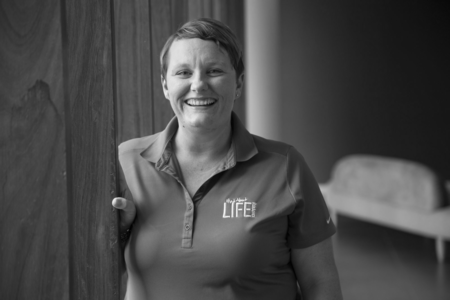
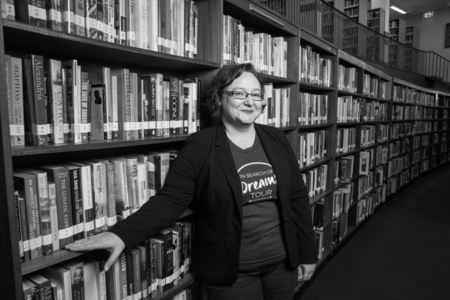
Though she initially tried, Sacha Burchgart couldn't escape the call of a career in financial advice; it just took staring down her own mortality to see what's possible when you do things differently. Jamie Williamson writes.

Despite one of her first jobs being in financial advice, Sacha Burchgart found working in a practice so dull she almost never became a financial adviser.

After leaving school, Burchgart landed a gig dealing with superannuation exits and rollovers before taking up a role within a financial advice practice. Finding it "too boring" at that stage of her life, she soon sought out a role in the marketing and events space.

I think when you've been doing this for a while, you know what's going to work and what's not, and when you back yourself and know what you're doing, you find everything falls into place... We have a very high success rate in terms of clients following through on the advice we give.
But she couldn't escape financial advice altogether. In this new role she was working with various practices, helping them develop their brands, as well as teaching them how to market to men versus women; a role she adored and a skillset that would serve her well further down the track.

"Generally, women are very much driven by their emotions, while men like facts and data. Knowing that is very helpful in explaining a financial position to both parties in a way that they understand and presenting the information you need them to understand in a way that they can grasp," she explains.

However, just a month out from her 23rd birthday, Burchgart was diagnosed with an acute form of leukaemia. Despite having been told from the outset that her odds of survival were slim, Burchgart fought bravely for two years to defeat the illness and, upon coming out the other side, decided she had a responsibility to help others.

"I didn't know how to help people. Mathematics wasn't my go-to, but I did like strategy and I liked educating people. I've always liked thinking outside of the box and so I thought a lot about what careers would allow me to do that, and then I just kind of tripped and fell into it," she says.

While still unsure of what to do, having managed a team in her previous role, a friend with an advice practice asked Burchgart for help with structuring, optimising and managing their support team.

"From there, I just learnt everything - they were very strategy-focused, and it was a really nice opportunity to see how thinking differently about a client situation and being very client-focused can have a monumental outcome," she says.

It inspired Burchgart to study a Diploma in Financial Planning, Advanced Diploma in Financial Planning and SMSF certification, and she began providing advice across retirement and estate planning, risk protection and business structuring.

"I think education is key to anything, and I think studying when you're a little bit older and already working in the field really gives you that hands-on experience in real-life scenarios that just doesn't come from a webinar or in a classroom," she says.

Taking the leap

Wanting to offer something more bespoke, after close to three years Burchgart decided to start her own business, Specialised Advice, concentrating on SMSF advice.

Soon after, Burchgart drew on her previous experience in marketing and rebranded the business to Burcheart, reflecting that she "puts her heart and soul into everything."

"I wanted it to be clear that we were putting the soul back into advice. It's not just about putting money into an investment; it's about giving clients what they need to make memories," she explains, adding that everyone starts at a different point and she finds many simply want to understand what they can do and how.

While she still specialises in SMSFs, the practice has evolved to offer financial advice on just about everything - accumulation, retirement, investments, wealth and business protection, and superannuation.

With a firm belief that advice should be for everyone, a few years ago Burcheart also began segmenting clients and introduced a tiered fee model. The three service packages the practice offers are the Essentials Solution for those just starting out or going into retirement who require more vanilla advice; the Elevate Solution for those looking to take their finances to the next level; and the Complex Solution which is best suited to high-net-worth individuals or business owners.

"We don't say no. A lot of firms will turn people away if their assets aren't considered large enough. I've built this business in such a way that we can help everyone," she says.

"It's not about putting them in a box, but we are being upfront about where they're at and what kind of service they can expect from us.

"This also allows a really good platform for our Professional Year advisers to start building relationships with the younger demographic and through that easier or less complex work. It also helps grow their confidence for later in their career when they're ready to start working with HNW or more complex clients."

Further straying from the traditional, Burchgart also decided to place less importance on the discovery or fact-find process. Instead, the cornerstone of her approach is what she calls a strategy considerations document that looks at all the 'what ifs', assessing the different potential strategies for the client and their various outcomes.

"That way clients can make that informed decision based on numbers and storytelling, rather than just us telling them what to do... Over time I've learned that if someone comes to us and says, 'This is what my friend is doing' or 'This is what I've done in the past', it's best to cashflow that out against something that we would do just so they can see the difference," she explains, saying it's about giving options to help make a calculated decision.

Burchgart finds this approach works for most clients - something she puts down to having a very strong, warm referral network.

"People will wait a long time to work with us, or they'll wait a long time for us to deliver advice depending on the work we've got on," she says.

"I think when you've been doing this for a while, you know what's going to work and what's not, and when you back yourself and know what you're doing, you find everything falls into place... We have a very high success rate in terms of clients following through on the advice we give."

The average Burcheart client is aged between 47 and 52 but she has seen a marked uptick in the number of people in their early thirties seeking advice. Meanwhile, its client book is 52% female and 48% male.

As a referral-only business, Burchgart worries the day will come when an existing client refers a friend of theirs and she won't have the capacity to service them, saying she's been told by many colleagues that she needs to scale and change the way she does things to make her business more efficient. But that's simply not for her.

"I believe I want to handle client experience and human experience more than the numbers, and I think if we focus on whether the client fits into a certain box rather than focusing on them as individuals that's when we lose that client connection," Burchgart explains.

Giving back

Having fought her own battle with cancer, Burchgart knows what it's like to be faced with the possibility of dying and the kinds of difficult decisions that must be made at such a challenging time.

For many years she has provided pro-bono financial advice via the Cancer Council and, while most of those she assisted weren't as lucky as her, still counts as clients many of their family members and friends today.

"I was in and out of hospital for two years, and I saw people pass away beside me, so I kind of understand what it is that people want to hear. It's very hard to speak to someone who is dying and not get emotional or inadvertently make your emotions the focus," she says.

"Sometimes, they just want to hear you say, 'Yeah, you're right - this isn't fair'. In those circumstances, you have to be very open to just listening because it's very hard to come to terms with mortality."

For Burchgart, it's not even about providing advice. While she's been to many funerals in the course of her pro-bono work, and helped their families navigate probate and so on, it's been more about establishing a supportive relationship that lets those grieving know they're not alone.

"It's about giving people when they're going through their worst that dignity of having someone who actually understands and also cares to still give their time after it all comes to fruition," she says.

Burchgart also works closely with survivors of domestic violence. In particular, she is developing a program to help victim-survivors return to work, namely into roles where they can feel safe but also aren't surrounded by other women who have experienced the same trauma.

"A lot of these women are very smart women; they've just had their confidence and a lot of their friendships destroyed along that journey... A lot of advisers are outsourcing or offshoring roles, but I think we should be looking at this as a means of building up these women," she says, adding that many are potential future advisers.

The biggest bugbear in getting this initiative off the ground is the sheer amount of red tape involved, so when she's not in client meetings or writing up Statements of Advice, Burchgart is connecting with and meeting up with other advocates in the space for advice and guidance on how to approach the necessary government agencies.

"I want to put more time into building something that matters but also helps to build the industry back up and gets women back into roles. I think working in the financial planning industry is a fantastic opportunity for people to learn financial literacy," she says.

"There are a lot of clients seeking advice and we're all looking for people who can hit the ground running, but I think we need to look at fostering talent ourselves through programs where people can grow with you."

Right now, she's at the devil's advocate stage in developing the program, asking peers to poke holes in her plans and point out where things could go wrong. Then, she'll begin applying for government grants to help get it off the ground.

The future of advice 

Much like her program for domestic violence survivors aims to do, Burchgart believes the key to getting more people to consider a career in advice is for the industry to start looking further afield than the traditional entry channels.

"I was in marketing, but it was a very client-focused, strategic and educational role... The technical skills grow with you. A lot of us when we're employing people, we rule out people who don't have the technical experience, but they might have that experience to educate and help," she notes.

"I firmly believe that if you believe in something, the knowledge will come very rapidly."

Burcheart has employed graduates and taken part in the Financial Advice Association Australia's work experience program, and while she acknowledges advisers are strapped for time, Burchgart feels it's the only way to ensure talent is fostered.

"Being in a practice is the best training ground, especially if they learn from the bottom up. Most of my team have gone from an admin-based or office management role into paraplanning, Professional Year or operations position. It's all about aligning your business values and then bringing someone in and seeing what they're good at and fostering it," she says.

Something else the industry needs to get a little better at, she says, is storytelling. If every adviser found a way to relate something back to a story in a client meeting, their message would be much more powerful and engaging.

"Maybe that's just me, because I'm a very visual person... The worst thing about my job is delivering an SOA and handing the client line items upon line items of text because I know it's not user friendly. All our clients come back with the strategy considerations document, not the SOA; it's like their current and future handbook," she says.

"The client doesn't care about the technical jargon we're mandated to give them; it's always the strategy considerations document that gave them the path and the plan and doesn't have product and service in it."

Looking ahead, Burchgart looks back first, saying it's funny how it took doing everything possible to remain an adviser to finally do all the things that make her feel like an adviser.

"When COVID hit, we all had so much time for personal life admin and advisers had so much work during that time, which was right after the education requirements had come in. We went from doing everything to stay in the profession to doing everything we did all that for," she recalls.

"I've never felt more like an adviser than I did then, talking clients off ledges, being a counsellor, a marriage counsellor, a sanity check... A lot of people don't have the training for that."

For that reason, she'd like to see financial planning degrees adopt a greater focus on behavioural finance and the more human side of advice.

"It's so important we study human behaviour and emotions to master our craft because advisers that really understand how to read nuances in a client meeting and pick up on cues succeed," Burchgart says.

"The first client I ever had passed away earlier this year, and it's about knowing you need to drop everything and knowing that, while other clients might be a little frustrated, this is why we do what we do.

"We're there to help when things don't go to plan and, in return, they're there for us, too." fs